Short answer: yes. You can absolutely swim on your period. If you've been sitting on the sand watching everyone else get in the water because you weren't sure, I want to clear this up properly.
I'm Danielle, founder of Eco Period. This question comes up constantly, especially from mums of teens who are navigating this for the first time. So let's get into the actual mechanics of it, without the vague advice.
Why the confusion exists
A lot of us grew up with the idea that you simply don't swim on your period unless you're using a tampon. That's not really about biology, it's about not having the right product. Water pressure does reduce flow slightly while you're actually in the pool or ocean, which is true, but flow resumes as soon as you're out. So the real question isn't “can my body handle it,” it's “what am I wearing that can handle it.”
Your options, honestly compared
Tampons work for swimming, but they need to be changed regularly and some people find the string uncomfortable or visible in a swimsuit. They also mean managing insertion and disposal around a pool or beach, which isn't always convenient.
Menstrual cups or discs are another option. They're not visible and can be worn for swimming, though they take some practice to insert confidently, especially the first few times.
Period swimwear is built specifically for this. It looks like a regular swimsuit but has an absorbent, leak-proof layer built into the lining, so there's no insertion, no string, and nothing to manage mid swim.
None of these is objectively “the” answer. It genuinely comes down to what you're comfortable with, what your flow is like that day, and how long you'll be in the water.
How period swimwear actually works
Our swimwear uses layered fabric technology in the gusset area. The inner layer draws moisture away from your body, a middle layer holds it, and the outer layer is leak resistant so nothing shows through onto the fabric itself. It looks and feels like a normal swimsuit from the outside, because that's exactly the point.
We offer a few different styles depending on what you need:
-
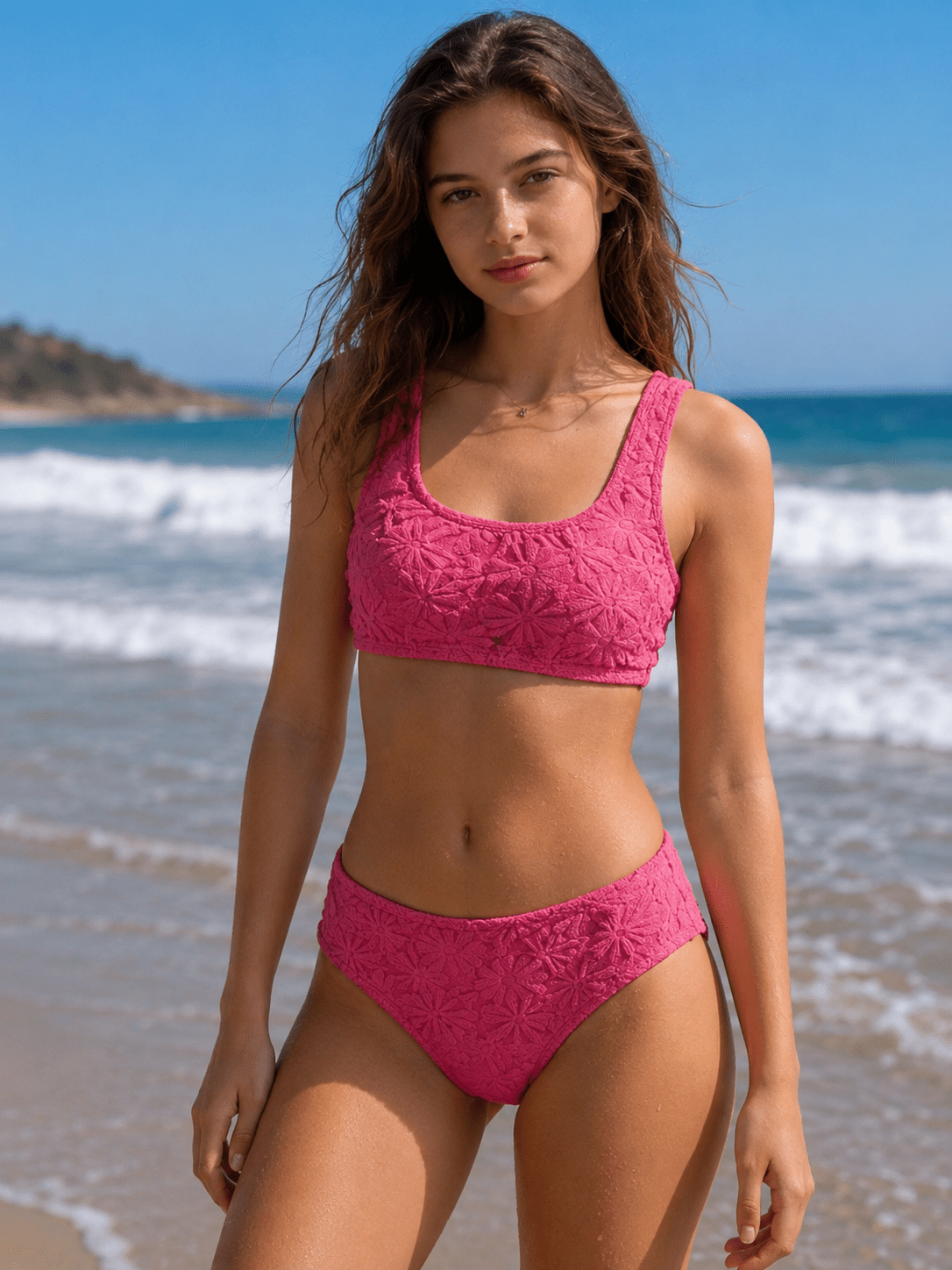
Salt and Bloom Bikini Set is a lighter option in hot pink or black, with UV50+ protection and absorbency up to 30ml, sized 8 to 16.
-
Racerback Pro is built with chlorine-resistant polyamide, ideal if you're a regular lap swimmer or spend a lot of time in a chlorinated pool.
-
Diamondback One-Piece offers full coverage in a range of colours, though it's not designed for heavy chlorine exposure the way Racerback Pro is.
-
Swim Shorts pair with any bikini top for extra coverage or personal preference.
What about heavier flow days
Period swimwear absorbency is generally best suited to light through moderate flow. On heavier days, some people prefer to pair it with a cup or tampon for extra confidence, or simply plan pool time around lighter days if that works for their cycle. There's no wrong approach here, it's about what makes you feel comfortable getting in the water.
For teens especially
If your daughter is hesitant about swimming on her period, period swimwear tends to remove a lot of the anxiety, because there's no insertion involved and it looks exactly like her regular swimwear. That matters when she's changing in a public pool bathroom or heading to a beach day with friends and doesn't want to explain anything to anyone. It also means she's not left sitting out of swimming carnivals, beach trips or pool parties because the timing didn't line up.
What it actually feels like to wear
One of the most common questions is whether period swimwear feels different to a normal swimsuit once you're in the water. The honest answer is that you'll notice a very slight extra layer in the gusset area, similar to how a thicker bikini bottom feels compared to a thin one. It doesn't restrict movement, and once you're swimming laps or floating around, most people forget it's there. What it doesn't do is feel bulky, visible under the swimsuit line, or noticeably different once wet, which is the main worry people have before trying it for the first time.
Getting the most out of it
A few practical tips if you're trying period swimwear for the first time. Rinse it in cold water straight after swimming, the same way you'd rinse chlorine or salt out of any swimwear, then wash it properly when you get home rather than leaving it damp in a bag. Avoid fabric softener, since it can affect the absorbent layer over time. And if you're planning a full day at the beach or pool, it's worth packing a spare pair for very heavy flow days, the same way you might pack a spare bikini top.
Common questions people ask before trying it
Will it look different to normal swimwear? No, it's designed to look and fit exactly like a regular swimsuit from the outside. The absorbent technology is built into the lining, not visible on the surface.
Can I wear it for a full day out? Yes, though for very heavy days you might want to change at some point during a long day out, the same as you would with any period product.
Does it work in salt water as well as chlorine? Yes, both. If you're a regular pool swimmer, Racerback Pro's chlorine-resistant fabric is worth choosing specifically, since regular chlorine exposure breaks down some fabrics faster over time.
The bottom line
Swimming on your period is completely normal and there's no biological reason to sit it out. The only real decision is which product helps you feel confident in the water, and that's a personal choice, not a rule. Whether that's period swimwear, a cup, or a tampon, the goal is the same: get in the water and not think about it again until you're ready to get out.