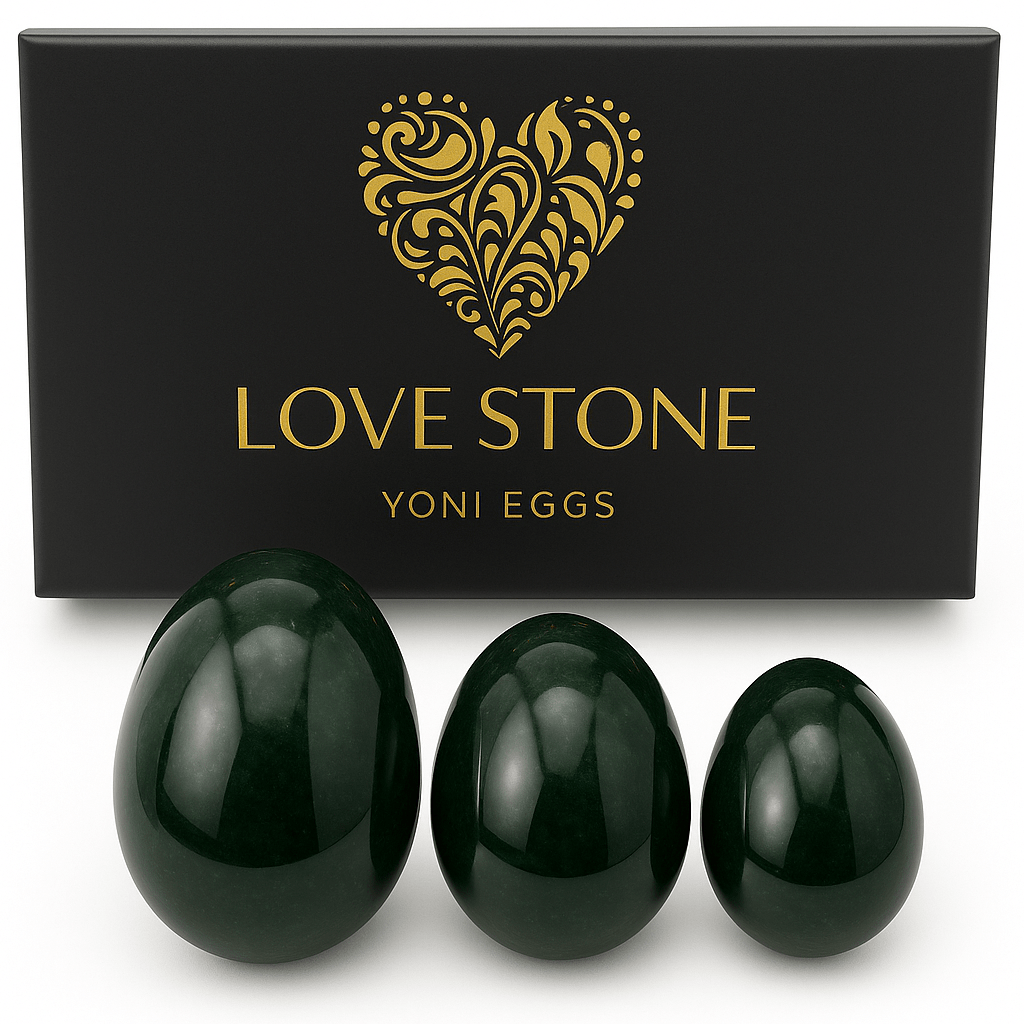
If you've bought a yoni egg and you're staring at it wondering whether it's actually what the listing said, you're not being paranoid. It's a fair question, and one I get asked more than almost anything else. I'm Danielle, founder of Eco Period, and here's the honest, practical answer.
Why it's hard to tell at a glance
Yoni eggs are usually cut from crystals like rose quartz, obsidian or nephrite jade. Unlike diamonds, these stones aren't individually graded for cut, clarity or carat, so there's no certificate number engraved anywhere to check. That gap is exactly what lower quality sellers rely on. A dyed, treated or entirely different stone can look convincing in a product photo, especially under studio lighting that smooths out any colour variation.
How genuine sellers actually verify their stones
Since individually certifying every single egg isn't standard practice or economically realistic for this category, the legitimate approach is what's called batch certification. A representative stone from each supplier is sent for GIA (Gemological Institute of America) certification to confirm the material itself is authentic, not dyed, treated or substituted for something else. Once that source is verified, the batch that comes from it can be trusted.
This is a genuine, sensible way to confirm authenticity for this kind of stone, and it's worth asking any seller directly how they verify theirs. If they can't explain their process, that's a real answer in itself.
The warning signs worth knowing
Pricing that seems too good. Genuine stones sourced and verified properly have a real cost behind them. If a price is dramatically lower than everywhere else, ask why.
No information about sourcing. A seller who can tell you where their stone comes from and how it's verified is a seller who's actually thought about this.
Colour that's suspiciously uniform. Natural stone has natural variation. Perfectly even, saturated colour across every single egg in a range can be a sign of dye.
The nephrite jade colour test
This one trips people up constantly, so it's worth explaining properly. Genuine nephrite jade, particularly from sources like the Cowell mine in South Australia, can look almost black indoors under artificial light. It's one of the most common messages we get: “is this really jade, it looks black, not green.”
Take it outside into natural daylight and you'll see the real, deep green come through. It's a noticeably different, richer tone than a true black stone like obsidian sitting right next to it. This is also why all our product photography is shot in daylight, so what you see in the photo matches what you'll actually hold. If your jade shifts colour like this in the sun, that shift is a good sign, not a red flag.
Questions worth asking before you buy
How is the stone type verified, and by whom?
Is this a single certified stone, or a certified batch from a known source?
Where does the stone come from?
Can you tell me anything about how the colour or finish might vary naturally?
A seller who can answer these clearly and without hesitation is one worth trusting.
What happens once you've got a genuine one
Once you're confident in the stone itself, looking after it properly helps keep that confidence long term. Clean it before first use and after every use, following the care instructions for your specific stone, since some are more porous than others and need gentler handling. Store it somewhere clean and dry, ideally in a breathable pouch rather than sealed plastic, and keep it away from other hard objects that could chip it. None of this is complicated, it just becomes routine after the first few times.
What this doesn't mean
None of this is a medical or therapeutic claim, and it's worth being upfront about that too. A yoni egg is a tool for body awareness and connection to self, not a medical device, and authenticity is about material integrity, not any health benefit. Be wary of any brand that tells you otherwise.
The bottom line
You don't need a lab report for every single stone to buy with confidence. You need a seller who can explain, clearly and specifically, how their stones are sourced and verified, and who isn't afraid to answer the “is this really jade” question directly. If you've got one in hand right now and you're not sure, take it outside into the sun before you assume the worst.
If you're shopping for one, our nephrite jade yoni egg set is batch certified through GIA the way described above, sourced properly and photographed in daylight so what you see is what you get.